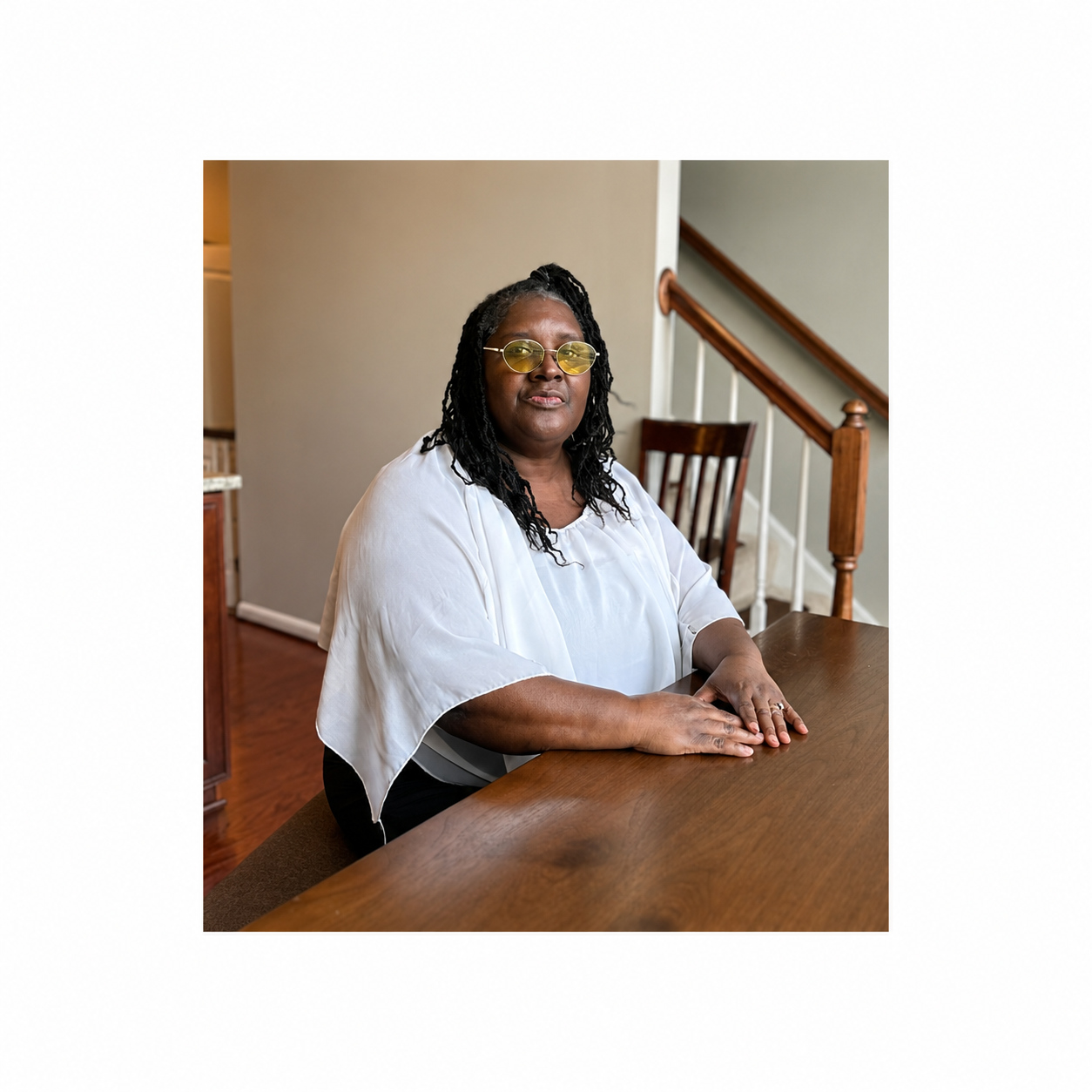
For Joseph, a cellphone is not a luxury, it’s a critical connection to healthcare, medications, and support he relies on every day.
Joseph, 30, has been connected to Community of Hope for more than half his life. His mother, a longtime patient, encouraged him to seek care as a teenager, when he was first navigating ongoing health challenges.
What started with visits to his longtime primary care physician grew into a network of support that has helped Joseph navigate healthcare, maintain Medicaid coverage, access medications, and connect with services that make daily life easier.
He’s worked with case managers, received medication support, emotional wellness care, and help navigating paperwork when his Medicaid coverage unexpectedly lapsed about a year ago. After multiple attempts to navigate the paperwork and renewal process on his own, Joseph still faced coverage gaps.
“I tried my best to get everything together, and it just was not working at all,” he said.
Joseph turned to Community of Hope for support, and our team helped him restore his Medicaid coverage after two months without it.
Managing chronic health is hard enough. Without healthcare coverage, he says many of the resources he relies on wouldn’t be accessible.
“I have severe asthma, and my mental health is very bad without my medication.” says Joseph.
“If Medicaid was to be removed, it would literally probably decimate me,” he said.
But one of the most meaningful forms of support came in a surprisingly simple package: a cellphone. Since Joseph is unable to work due to his health challenges, paying for a phone and monthly service wasn’t always possible — and without a reliable phone, staying in touch with his healthcare providers became difficult.
Joseph had free phone service, but the devices kept failing. Although he paid to replace two devices out of pocket, and still ended up with a phone that didn’t work. Without a working phone, he missed appointment reminders and couldn’t be reached — and at one point, he was discharged from a medical service because staff couldn’t get in touch with him.
His case manager was able to get him connected to a fund specifically to remove everyday barriers standing between our patients and consistent care — helping cover the practical, often-overlooked needs that don’t fit neatly into a medical visit but are just as critical to staying healthy. For Joseph, a cellphone was a dependable way to stay connected to his care team and even receive appointment reminders.
“Having this phone and having the service that goes with it is really helpful,” he said.
He spoke highly of his case manager, Madeline, who helped him work through different challenges. More than anything, Joseph says he appreciates having people who listen and help him find solutions.
“Ms. Madeline has helped me so much! Every case manager or staff member I’ve worked with always tried their very best to help me, and I am so appreciative”
For Joseph, having access to healthcare is more than doctor’s appointments and medications. For Joseph, that also meant something else: without a working phone, he couldn’t even access transportation support to get to appointments — a resource many patients managing chronic conditions rely on to stay on track with care. He’s grateful to know that support is only a phone call away.